Daniel Micu
LLMO DRS – Adoption Metrics
- LLM Organizations: 677
(↑ +30 | +5%) - Total Sites: 799
(↑ +152 | +24%) - Business Prompts Processed: 86,998
(↑ +20,164 | +30%)
Repository Service Migration
- Environments on Repository Service: 1,120
(Target: 800 | 140% achieved | 11% of total environments) - Customer Environments Migrated (February): 215
(Target: 200 | 108% achieved) - Major Incidents (Migrated Environments): 0
(Stable operations this month)
AI Transformation
We are accelerating AI adoption across the organization through two complementary initiatives focused on operational excellence and intelligent automation.
AI Firefighting Companion & AI Ops Integration
Originally developed by Cristi Cibu as a local IntelliJ/Augment-based solution, the Firefighting Companion enhances issue identification and resolution workflows. We are now porting the solution to Claude/Cursor to enable broader team adoption and scale its impact.
This initiative aligns closely with the broader AI Ops program led by Adelina Marian, strengthening our ability to detect, investigate, and resolve incidents faster through AI-assisted workflows.
Workflow Automation & Tool Integration
In parallel, Luis Micu has developed an automation framework designed to streamline operational flows and integrate multiple tools within the corporate ecosystem. The objective is to reduce manual effort, improve system connectivity, and increase execution speed across teams.
A live demo of both solutions is planned for next month’s newsletter.
LLMApps Action Planner
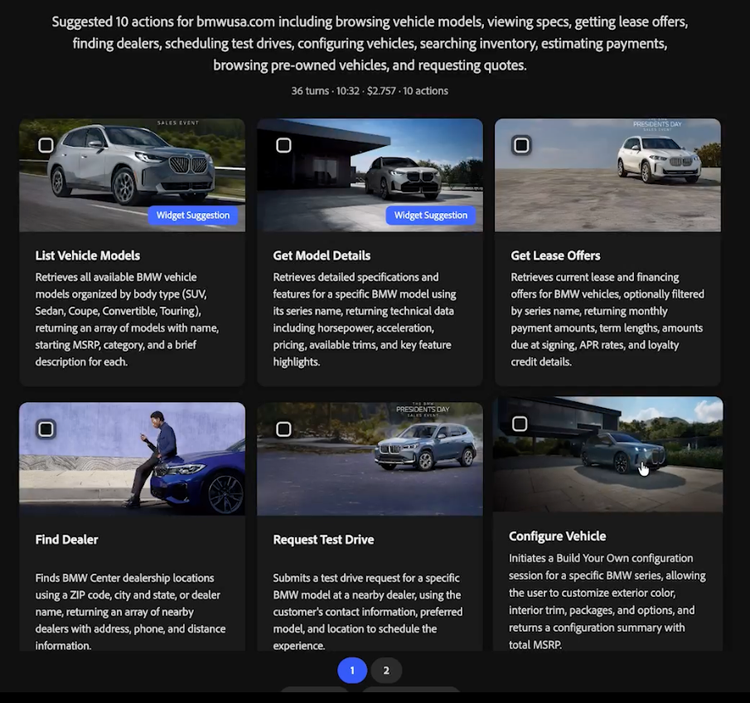
A Claude Code Agent SDK with custom discovery skill, deployed on Azure with Playwright MCP, powered by AWS Bedrock, for automated MCP tool discovery.
Demo: 2026.03.02 - LLMA Action Planner v0.0.2 (George Chiriac)
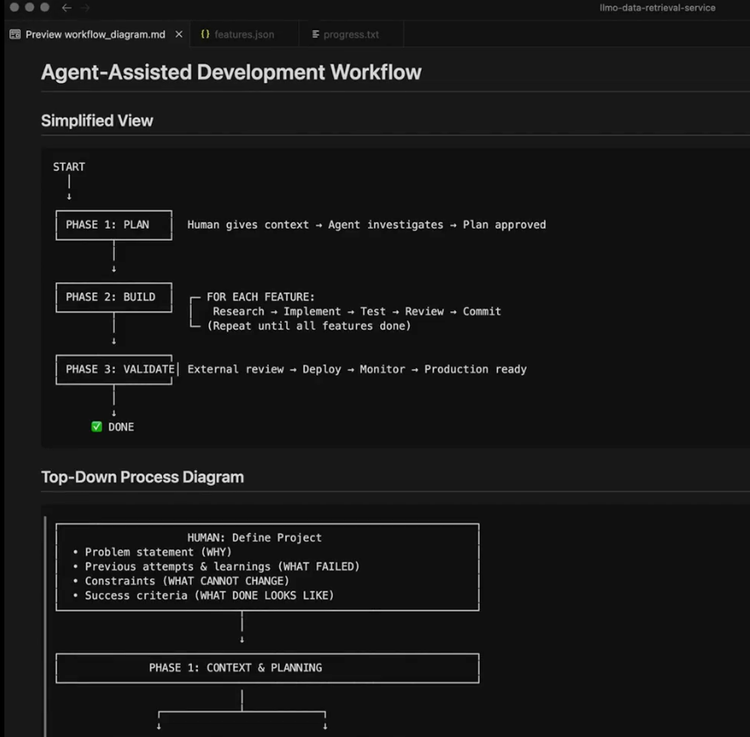
Agent-Assisted Developement worflow
The Demo shows a standard loop for developing with AI by using three phases
- Context preparation and initial feature plan development
- Iterating sequentially over each feature and the programmer will validate each implementation
- Any improvements will be used to improve already implemented features
- Each feature will be committed separately
- Any work that it not up to standard (like workarounds) will be discarded and a new approach will be determined
- Final validation using a different agent and dev/main deployment
Demo: 2025.02.25 - Agent-Assisted Developement worflow (Andrei Enascut)
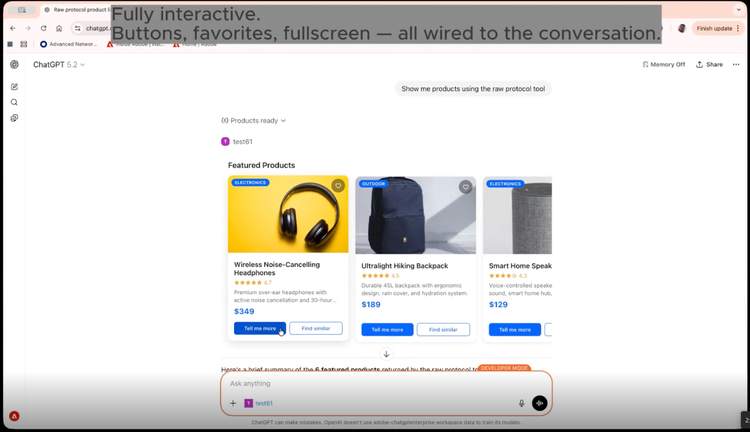
LLM_Apps_SDK
LLM Apps SDK is a lightweight JavaScript library that lets you build interactive UIs that render directly inside ChatGPT conversations.
Under the hood, the SDK handles the boring stuff: connecting to the ChatGPT host, receiving the structured data your tool returned, adapting to the host's theme, and managing the widget lifecycle. You just write standard HTML and JavaScript — fetch the data, render your UI, wire up your buttons. The SDK takes care of the rest.
Nicolae Dima
Content AI – Overall Status
Content AI is entering a decisive growth phase, shifting from performance optimization to large-scale enterprise enablement for AEM as a Cloud Service customers. Key highlights from February and March include:
- Strategic Scale-Up Focus – Transitioning from accuracy and retrieval improvements toward full enterprise scalability and adoption.
- 53-Point Average Semantic Score – Continued gains in content intelligence performance, reflecting measurable quality improvements.
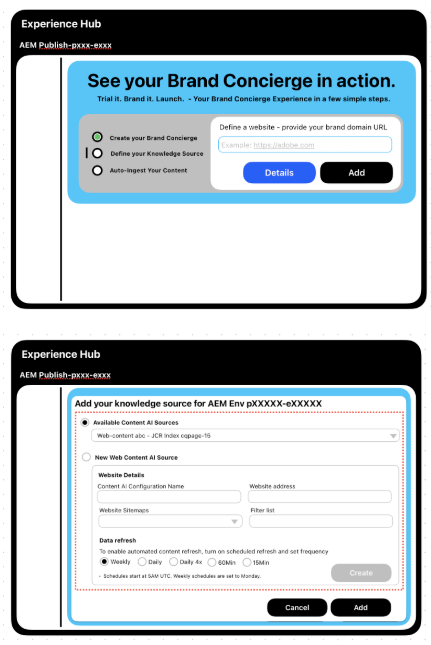
- 20 Customers Ingested & Vectorized – Successfully onboarded as part of the Brand Concierge Light-Up initiative, marking tangible progress in enterprise activation.
- Provisioning at LLMO Scale – Enhancing infrastructure to support demand from 3,000+ customers.
- Brand Concierge & Site Advisory Agent Enablement – Advancing core requirements under the Light-Up program.
- Dedicated Fluid Teams Launched – Cross-functional vertical teams established to resolve systemic gaps identified during the Spring 2026 workshop.
Content AI – Spearhead initiative ignited
- Project Spearhead is an agentic orchestration framework designed to accelerate engineering delivery by embedding AI directly into the SDLC. Its purpose is to enable engineers to confidently delegate repetitive, low-leverage, or operationally intensive tasks to a coordinated system of intelligent agents — while ensuring adherence to enterprise standards for quality, security, and operational excellence.
Link to reel: https://newsfeeds-stage.adobe.io/reel/51
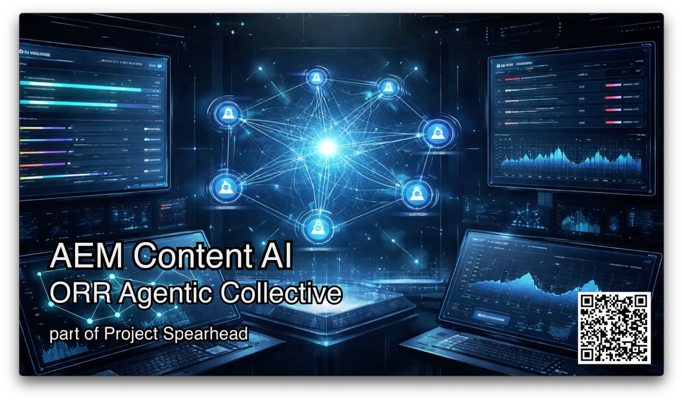
Spearhead Initiative: ORR Agentic Collective
An agentic collective (custom “ReasoningAgent” base, CrewAI-style async coordination) that continuously audits all Content AI services against ORR criteria — designed to extend to OLA and CI/CD readiness
- An async Coordinator fans out six data-collection agents in parallel: WikiAgent, JiraAgent, CodeAgent, PrometheusAgent, GitHubAgent, BrowserAgent, SynthesisAgent** which produces gap files with before/after config diffs, versioned insights, and a ranked next-actions table.
- A Spec Kit (`.specify/specs/`) is the source of truth for every feature and work item — agents generate PR-ready artifacts that humans review before merging. Live dashboard: service topology map, component graph (440 components, 144 connections), per-service GA%/LA% scores, gap files, insights timeline, real-time agent console.
Link to reel: https://newsfeeds-stage.adobe.io/reel/52
AEM Content AI – Adaptive Acquisition Research Tool
The Content AI – Adaptive Acquisition Research tool is a strategic discovery and planning workbench designed to power our next generation of adaptive acquisition and data-driven index design. It transforms the Cloud Manager seed into actionable intelligence by identifying representative tenant domains, discovering sitemaps, and running multi-strategy fetch experiments (httpx, Playwright, crawl4ai). By comparing content yield, response performance, and JavaScript rendering needs, it recommends the optimal acquisition adapter per domain — backed by confidence scoring and clear rationale.
Augmented by a local LLM, the platform goes beyond scraping to generate insight. It infers industry and site type, evaluates content quality and insight density, and identifies which fields truly add value for search and indexing. These intelligence signals directly inform index configuration, ensuring that both acquisition strategy and semantic structure are shaped by real data rather than assumptions.
By centralizing live scraper telemetry, cross-adapter benchmarking, migration recommendations, and advanced experiments such as page clustering and domain hyper-graphs, the tool creates a unified decision layer for acquisition, platform, and search teams. The result is a measurable shift from manual configuration to intelligent, evidence-based content onboarding — accelerating semantic search readiness and elevating content intelligence at scale.

Link to reel: https://newsfeeds-stage.adobe.io/reel/53
Nicu Melcioiu
Sample Title
<short description of the demo goes here>
Demo: Demo Link
Ioana’s Topics:
Videos and the final versions of the February highlights will be added here tomorrow, March 5th.
- Update Profile & Quiet Hours GA
- Evergreen Onboarding and operational Stability Focus
- Release Toggles Agentic-focused new features
Update Profile & Quiet Hours — Now Generally Available
We’re happy to announce that Update Profile & Quiet Hours are now GA.
These capabilities give users better control over how and when they engage, supporting healthier workflows and more predictable interactions.
Thank you to everyone involved in getting this over the line — from shaping the experience to ensuring its production‑ready.
From Vision to GA: The Journey
This release reflects a sustained journey—from early vision and customer feedback to GA—supported by strong engineering discipline and SRE-led foundations.

How the capability evolved from concept to GA, highlighting key milestones and decisions.
https://newsfeeds-stage.adobe.io/reel/40
A behind-the-scenes look at the observability, guardrails, and stability framework that enables a safe scale to GA.
https://newsfeeds-stage.adobe.io/reel/41
Evergreen Onboarding & Operational Stability
A key theme this month has been Evergreen Onboarding, paired with a continued focus on operational stability.
Release Toggles: On-call and Agentic‑Focused Innovation
We’re also pushing forward with new agentic‑focused features in Release Toggles.
This is an exciting direction where automation, intent, and dialogue start to play a bigger role in how toggles are configured and managed. These improvements are laying the groundwork for:
Skyline On‑Call — Instant Feature Control
Sky CLI enables rapid, safe feature shutdowns across all customers — ideal for on‑call scenarios speed and precision matter most.
🎥 Fast. Controlled. Reliable.
https://newsfeeds-stage.adobe.io/reel/26
Skyline On‑Call: Custom‑Fit Toggle Hub
If you’re on‑call and an emergency arises — and you’ve confirmed the behavior is controlled by a feature toggle — this is the place to go.
The Switchboard guides you to safely switch a feature ON or OFF:
- for specific customers, or
- for all customers,
in just a few seconds.
It’s visually guided and lets you act using clear criteria, so you can make changes quickly,
confidently, and with control — even under pressure.
Think of the Switchboard as your on‑call toolkit for rapid response and safe decision‑making.
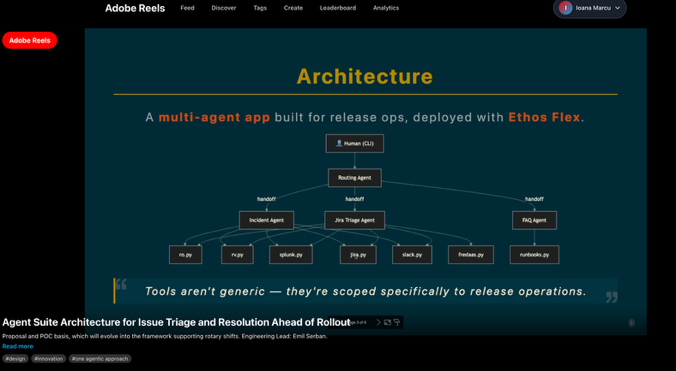
Agent Companion Suite Architecture for Issue Triage and Resolution Ahead of Rollout
When validating a release, speed alone isn’t enough — confidence and clarity matter just as much.
Agent Companion introduces an Agent Suite architecture designed to support issue triage and resolution before rollout, helping teams identify risks earlier and act decisively.