
TGIF Session Recap — 27 March 2026
Sprint 2 of the AI Fluency initiative focused on AI Code Reviewer — getting AI to review pull requests with senior-engineer-level judgment. Here are the highlights.
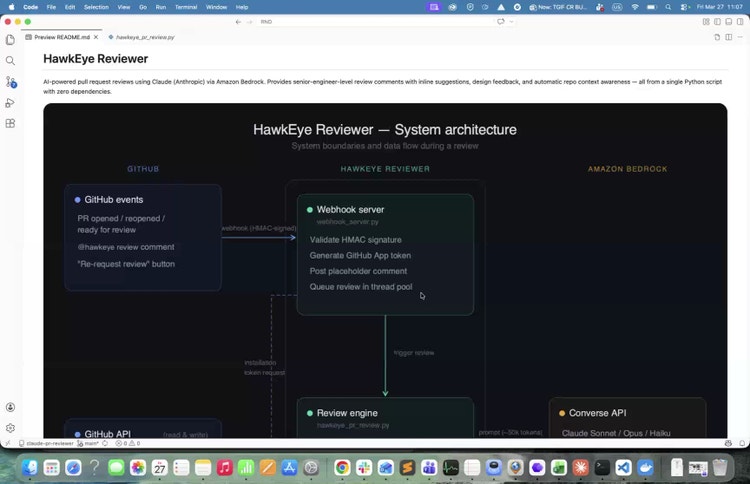
Hawkeye — AI-Powered GitHub PR Code Reviewer
Presented by: Bogdan Posa, Andrei Fecioru
Hawkeye installs as a GitHub app in minutes and begins reviewing every pull request automatically — no GitHub Actions required. It builds context from repo structure, sibling files, and custom team guidelines, then reviews across 9 quality dimensions. A MapReduce pipeline handles large PRs without hitting LLM context limits. When ran live on a Python service, the bot caught a performance bug, a missing async exception handler, and a silent API error that human review had missed.
Q: Does code leave Adobe premises?
A: No. The bot runs on an Adobe Azure subscription with your own Bedrock key. Teams that want full isolation can use the optional GitHub Actions installation instead.
Q: Is this dependent on GitHub Actions?
A: No. The primary installation is a GitHub App on Azure. GitHub Actions is an optional alternative.
Q: Can the bot validate its own suggestions by running tests, rather than just doing static analysis?
A: Not yet. Suggestions currently validate against your linter config only. Confirming that proposed changes compile and pass tests is a known gap and on the improvement list.
Q: Is there a feedback loop to flag bot suggestions as wrong, so it improves over time?
A: Not yet. The current workaround is to document recurring false positives in the custom instructions file. A proper mechanism where the bot learns from rejected suggestions is on the roadmap.
Sub-agent Orchestrated Review Skill
Presented by: Ionut Chirvasa
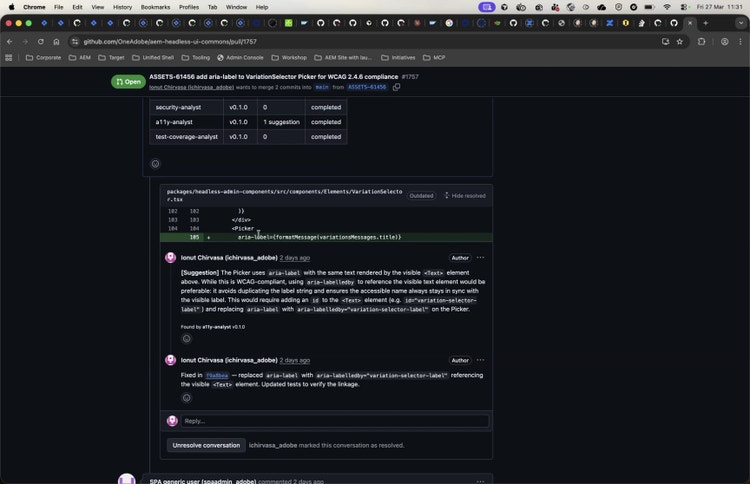
Why run one AI reviewer when you can run four in parallel? This Claude Code skill identifies the PR’s domain and dispatches specialist sub-agents — code quality, security, accessibility, test coverage — concurrently. The orchestrator consolidates findings, eliminates duplicates, and posts a clean review on the PR. Only critical issues trigger a change request. A companion “implement findings” skill can auto-resolve what the bot flags.
Q: Isn’t this reinventing the wheel? Native Claude tools already run sub-agents for code review.
A: The advantage of custom sub-agents is domain specificity — each agent carries focused expertise (accessibility, security, etc.) rather than generic coverage. Generic tools are a valid starting point; custom solutions are warranted when you need fine-grained tuning they don’t offer.
Challenger Agent — Self-Correcting Reviews
Presented by: Rares Achim
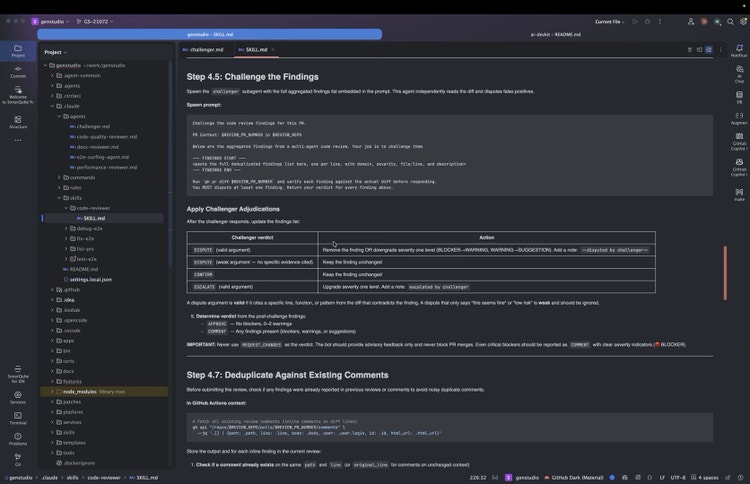
The fix for AI false positives: add a second agent that challenges the first. After reviewers run, the Challenger Agent independently evaluates every finding — dismissing noise with evidence, confirming valid issues, and escalating what deserves more attention. One month in production on the JS Studio monorepo: ~2,000 runs, 6–7 minutes each, $1–$2 per run. Human reviews used to take an hour.
GitCorp Support & Selective Auto-fix
Presented by: Codrina Mihalache
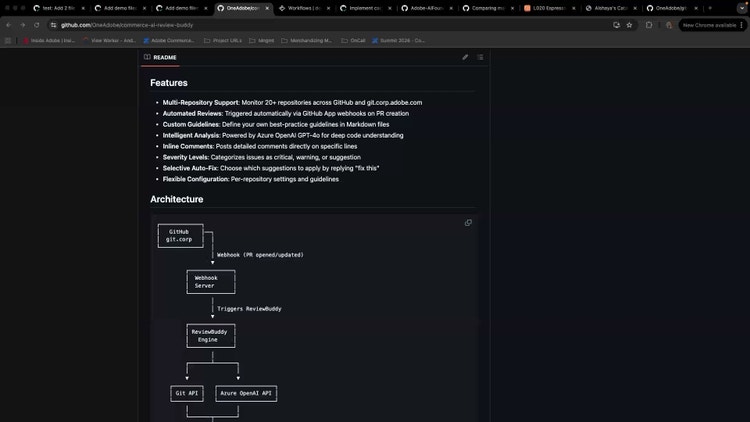
Commerce repos are on GitCorp with no GitHub Actions access — so the team made it work anyway. The solution supports both GitHub and GitCorp via Git apps, with per-repo guidelines drawn from the team’s existing AI artefacts library. The headline feature: reply “fix this” to any bot comment and it commits the change directly to the branch. Live demo: SQL injection vulnerability detected, flagged, and patched without leaving the PR.
Four teams, one shared observation: AI code review is production-ready today, and Hawkeye is available to any team now. Thanks to Bogdan, Andrei, Ionut, Rares, and Codrina for the demos, and to Dan for driving the sprint.
Have feedback, a demo proposal, or a topic you'd like to see covered? Submit it here.